Ngorongoro Crater
Descend into a prehistoric volcanic crater teeming with wildlife. This UNESCO World Heritage Site offers unparalleled game viewing.
Highlights
- World's largest intact volcanic caldera
- Black rhinoceros sightings
- Crater floor game viewing
- Maasai cultural encounters
- Olduvai Gorge archaeological site
- 500+ bird species including flamingos
Best time: Year-round (June–September ideal)
Best for: Black Rhino, Crater Floor Safari, Maasai Culture
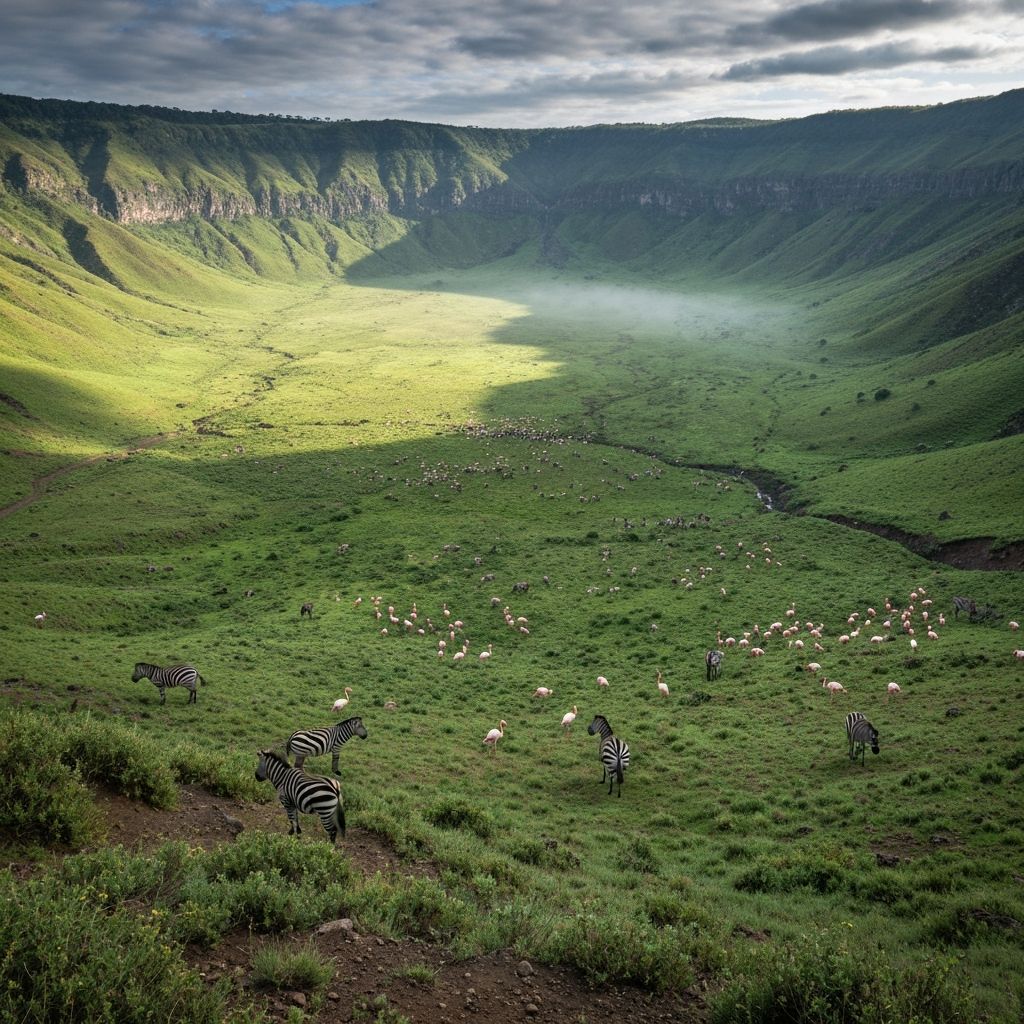
Formed when a giant volcano exploded and collapsed on itself two to three million years ago, the Ngorongoro Crater is often called 'Africa's Garden of Eden.' The crater floor is a self-contained ecosystem where an estimated 25,000 animals live permanently.
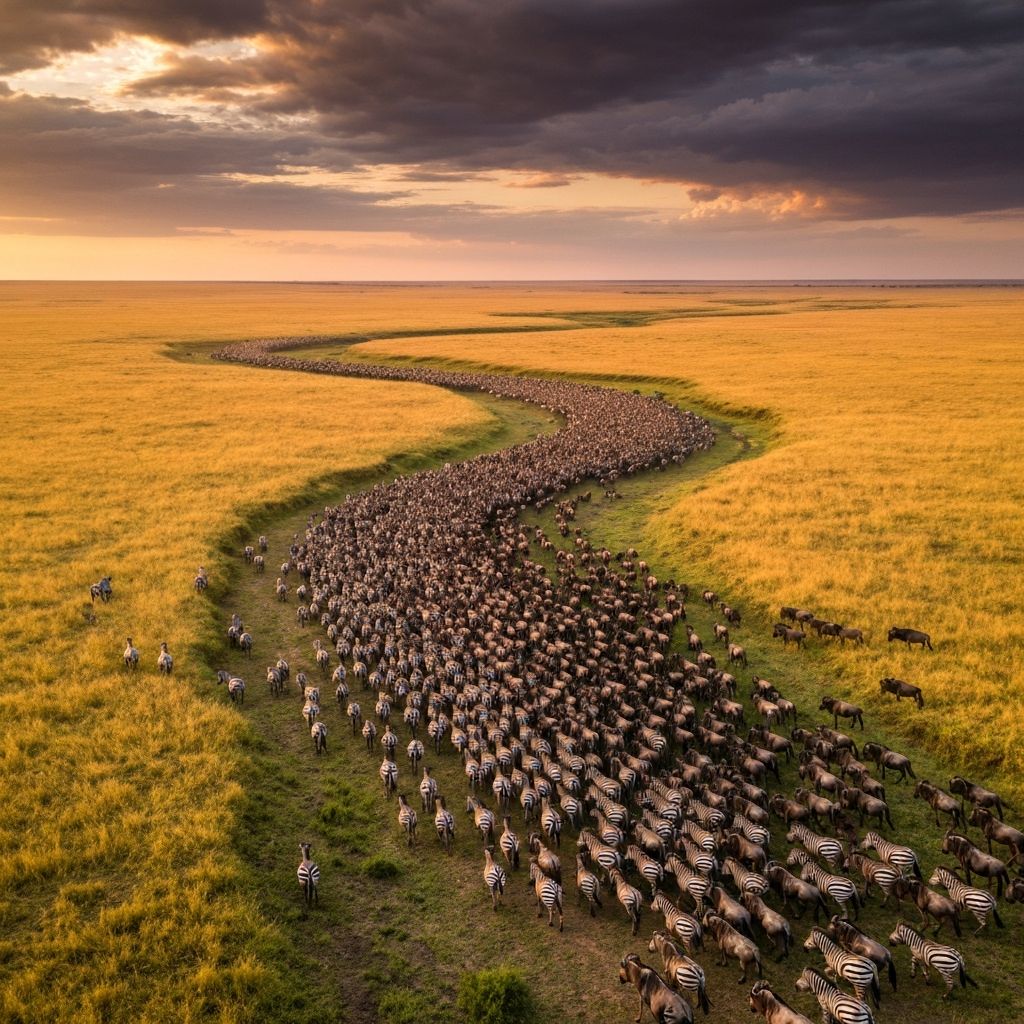
The crater is one of the best places in Tanzania to see the endangered black rhinoceros. Lions, elephants, buffalos, zebras, wildebeest, and hippos are easily spotted on the crater floor. The shallow alkaline lake at the center attracts flamingos and other water birds.
The crater rim, at 2,286 meters above sea level, offers stunning views and cooler temperatures. The surrounding Ngorongoro Conservation Area is home to Maasai communities who graze their cattle alongside wildlife, demonstrating a unique coexistence of humans and animals.
Descend 600 meters to explore the wildlife-rich crater floor on game drives, experience traditional Maasai culture and lifestyle, enjoy nature walks along the forested crater rim, and explore the 'Cradle of Mankind' at Olduvai Gorge archaeological site.
Drive from Arusha (3-4 hours) or combine with a Serengeti safari. The crater can be visited year-round. June to September offers the best wildlife viewing with less vegetation. December to March brings green landscapes and migrating birds.
Other Destinations
Discover more places to pair with Ngorongoro Crater.